

Housing First
A less traditional approach to homelessness
We’re welcoming new funding opportunities, as well as partnerships with housing associations or private landlords for our Housing First service.
Read on to discover how it works and the difference it makes.
What is Housing First?
Housing First is a successful approach that provides people with housing ‘first’ – a stable home from which to start rebuilding their lives. The only requirement is a commitment to a tenancy; no other conditions are imposed.
Shared or temporary housing often doesn’t meet the needs of those with complex histories of homelessness. By offering a self-contained home, Housing First removes instability and allows people to choose the support they want, when they want it, at their own pace.
We’ve been running Housing First since 2020 and are now the largest provider in West Sussex. We were immensely proud when our programme was recognised for its impact with a nomination at the national 2025 Charity Awards, the longest-running and most prestigious awards scheme in the charity sector.
Our service is:
- Flexible and long-term: support has no fixed end date and adapts as needs change.
- Person-centred and client-led: clients using substances or alcohol shape their own recovery journey.
- Holistic and trauma-informed: we connect clients to health, wellbeing and community services, focusing on building trust above all.
Housing First has been called the ‘gold standard’ in tackling homelessness. Over time, clients gain the space to decompress, heal and start dealing with challenges more constructively. Many begin to take notice of their mental and physical health, make decisions about which relationships are supportive and think about the future. Change can’t be forced – but with stability, people often find their own moment to take the next step.
How Housing First helps people into homes
Housing First is for people who have repeatedly struggled in shared or temporary accommodation, often because of challenges such as poor mental health, substance use, domestic abuse or contact with the criminal justice system. Referrals can come from anywhere – the relevant local authority, drug and alcohol services, or other charities for example.
The first question we ask each client is: “Where do you want to live, and where will you feel safe?” From there, we work with housing associations and private landlords to secure a self-contained studio or one-bed property that matches their needs.
We work with councils and housing associations across West Sussex to secure properties for people supported by Housing First. In 2024, we expanded into Crawley with a new scheme in partnership with Crawley Homes and Crawley Borough Council. Our current partners also include Worthing Homes, Saxon Weald, Adur Homes, Southern Housing and Clarion – all committed to providing safe, long-term homes.

Adur and Worthing Councils; Worthing Homes and Adur Homes
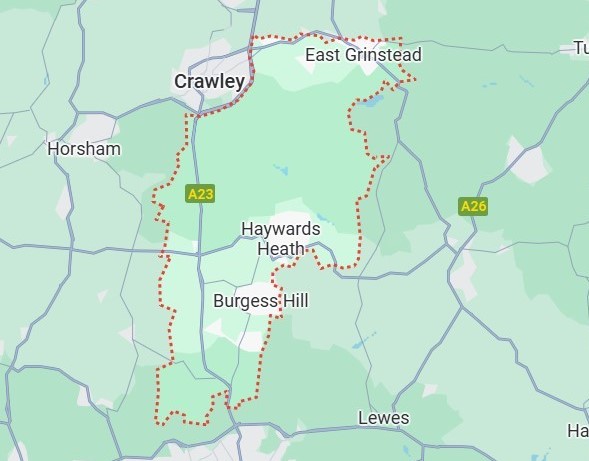
Mid Sussex District Council; Clarion Housing

Horsham District Council; Southern Housing and Saxon Weald

Crawley Borough Council; Crawley Homes
Private landlords also play an important role, especially for clients who face barriers such as guarantor requirements. We’re always keen to connect with socially conscious landlords willing to collaborate.
How we support Housing First clients
Support is open-ended and wraparound, shaped entirely by what each client wants and needs. Housing First workers build close, respectful relationships with clients – not as authority figures but as trusted allies. They support with everything from life admin like bills, benefits and Universal Credit journals, to attending appointments, liaising with probation or simply showing someone how to use their new appliances.
Specialist support is available in-house through Turning Tides’ substance misuse and mental health workers, alongside partnerships with external services such as the NHS, probation services and CGL.
There are no time limits. On average, support organically reduces back after two years, but the door is always left open. Clients can return for more support whenever they need it – unlike many systems that close doors too quickly.
Clients are held to the same expectations as any tenant of a housing association: if issues arise, it’s seen as a signal that more support may be needed, not as a reason to withdraw help.